
Every Day We Fight Weapons: Guns, Parts and Drops
How weapons work in Every Day We Fight: the guns added at 1.0, how parts and drops fit together, and which guns a player used against shields or armor.
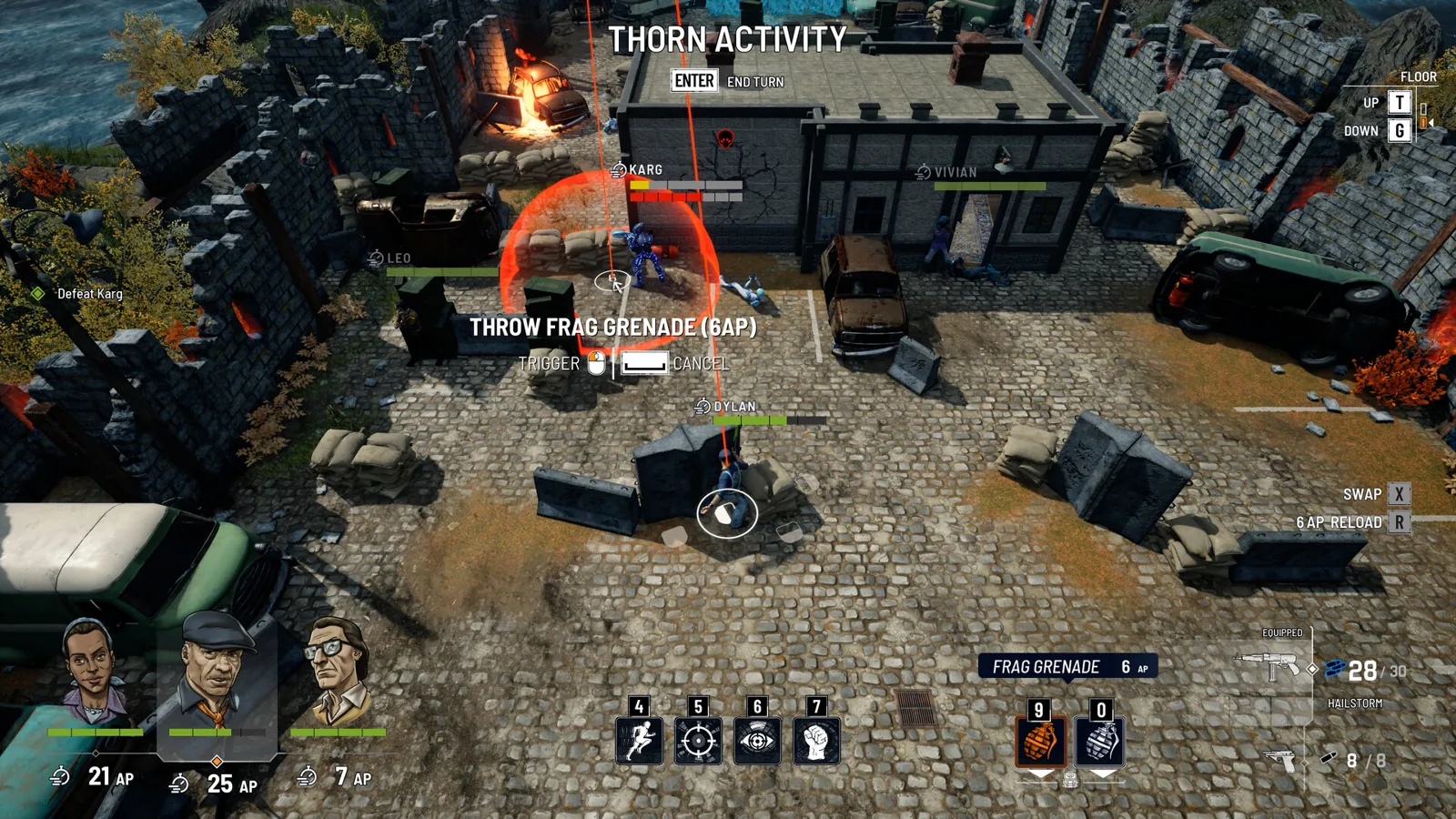
Table of Contents
Every Day We Fight is a turn-based tactics game where you aim each shot yourself, so the interesting question about a weapon is not its name but what it does to a target's shields, armor and health. The game's Steam page describes 12 unique guns and more than 100 gun attachments and parts, some carrying legendary perks. The 1.0 update notes published on 22 October 2026 add five named guns — Boomer, Shredder, Roaster, Stumper and Riptide — plus 52 new parts, 13 of them epic.
That gives you two layers to plan around: the gun in a fighter's hands, and the parts bolted onto it. Below is what the named guns do, how drops and crafting feed the roster, and how one player used them in a 1.0 launch stream.
The guns named in the 1.0 notes
| Gun | Type | What the 1.0 notes say |
|---|---|---|
| Boomer | Explosive launcher | Listed as a new gun; no further description |
| Shredder | HMG | Accuracy climbs the longer you hold the trigger |
| Roaster | Flamethrower | Sets everything alight |
| Stumper | Shotgun sidearm | Listed as a new gun; no further description |
| Riptide | Full-auto pistol sidearm | Listed as a new gun; no further description |
The same notes describe 52 new parts, with an example epic perk: land three headshots in a row and your next bullet nukes the area. The earlier "Road to 1.0" announcement frames the update as roughly 70% more guns and 100% more gun parts than the Early Access build, so guides and videos recorded before 1.0 show a smaller arsenal than the release version.
What the guns felt like in a 1.0 run
Christopher Odd, who was involved in the game's production, opened his 1.0 launch stream in Forever War mode and worked through the new weapons. His impressions, as a player rather than a stat sheet:
- Shredder — his standout. The first shot costs 4 AP, but holding the trigger afterwards spends about half an AP per bullet, so you can fire for a long stretch and grind down shields.
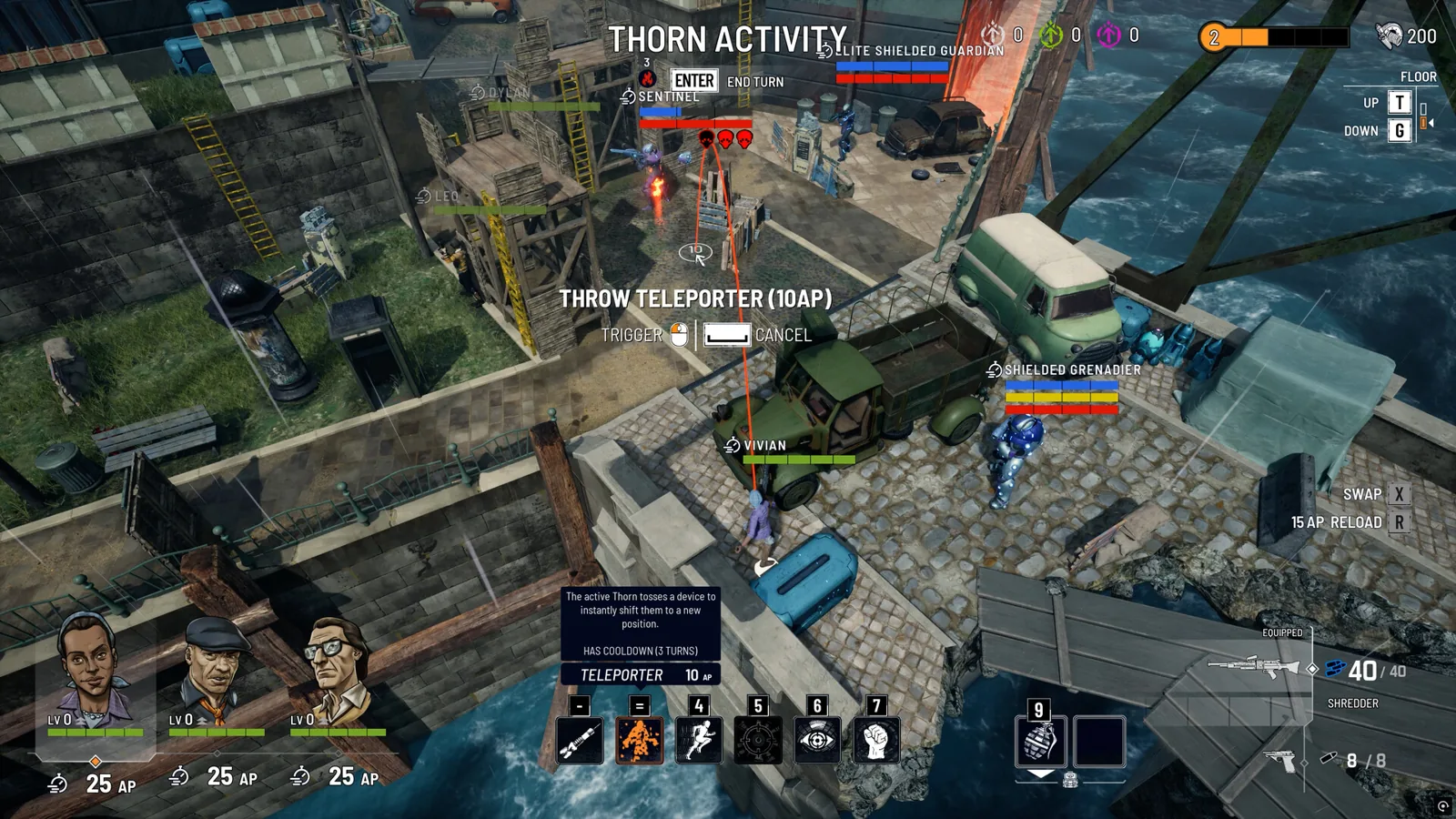
- Roaster — "really good" against shields and direct health; enemies "melt". It also set his own operative on fire, which he read off the status icon as 25 damage at the start of that unit's turn.
- Boomer — strong, and his tool for blasting individual chunks of armor off so the exposed area can be shot. He found it poor against shields.
- Stumper — taken as a sidearm.
- Riptide — an automatic pistol he used to strip shields late in a fight.
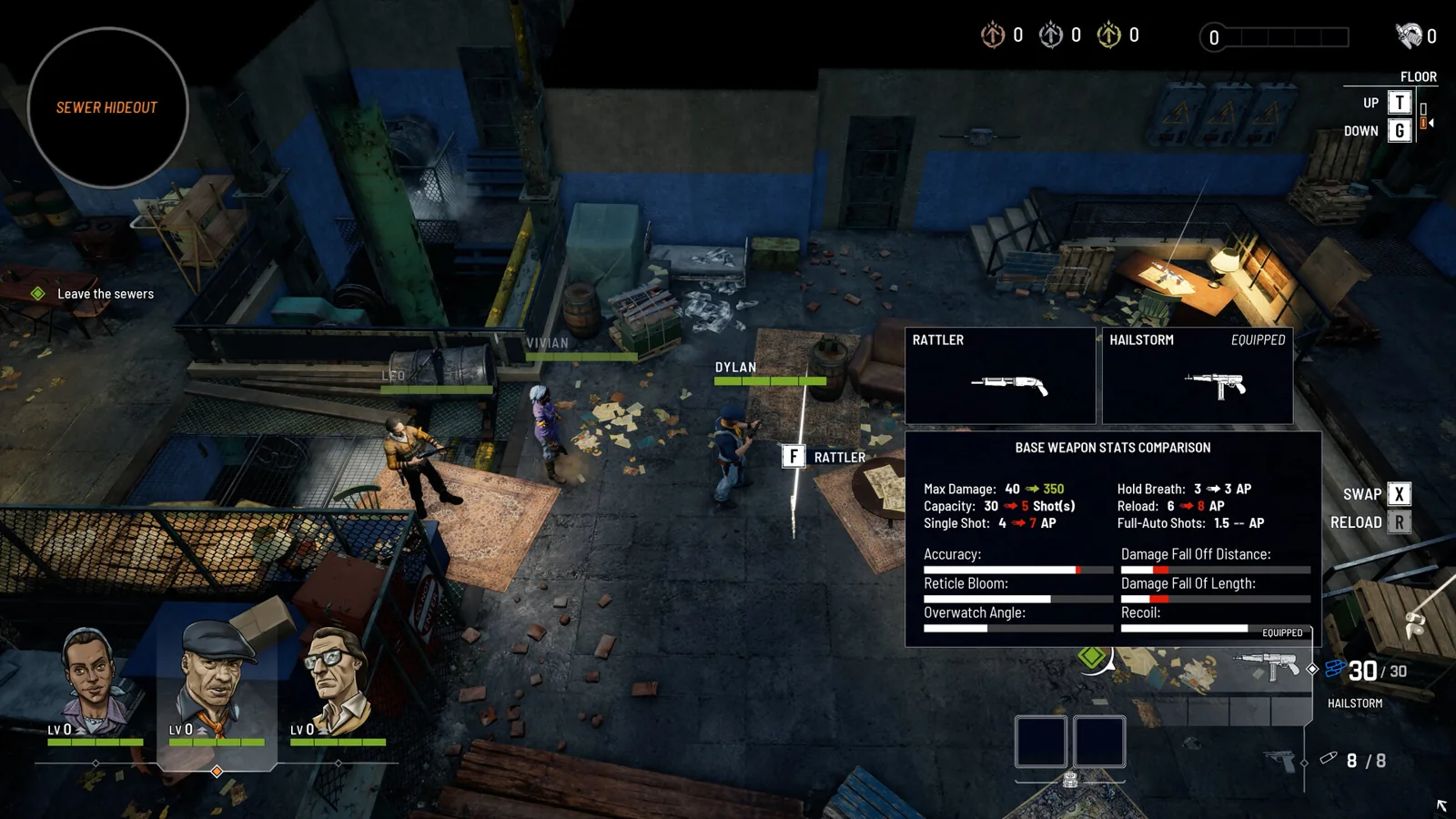
Elsewhere in the same stream he was carrying a Long Haul sniper rifle, a Deadbolt sniper rifle, and the rifter weapons Rattler, Mangler and Razorbolt, which he described as strong. He also kept using the base shotgun, calling it one of the best weapons. Parts for guns he did not yet own, such as a Stingray mag, went into his stash instead of being equipped. In Forever War, a voluntary reset drops you back to level 1 with just a dart gun and a teleporter.
How you get weapons and parts
Weapons arrive through several routes, and the stream shows them working together:
- Post-fight drops. At the end of an encounter a rift appears; interacting with it brings in a chest. In his first fight that chest produced a rare Terragonian muzzle, a common Stingray mag and an epic part.
- Rifter stash chests. Objectives award keys, which he had in white, green and purple tiers and spent on chests in the stash area for rarer gear.
- Loot tables. The first time you find an item it can be added to your loot table, so that item becomes available in later randomised drops and runs.
- Crafting. At the workbench you spend scrap on parts, bandages and grenades. He raised his scrap and XP income with the custom difficulty modifiers before doing this.
Attachments and what they change
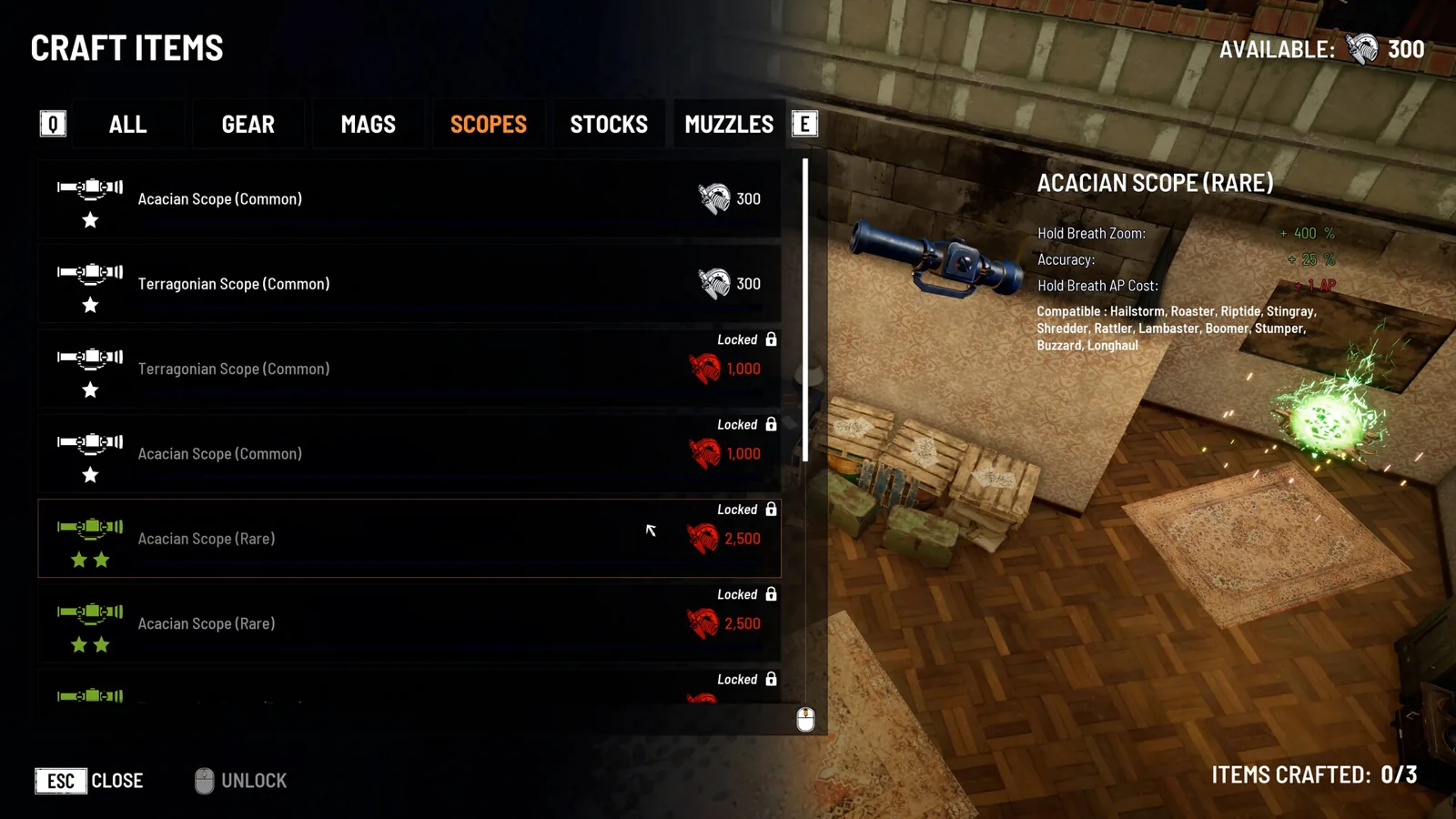
Parts are the main way you tune a gun, and they drop randomly. A muzzle he equipped raised the shoot AP cost by one, but increased maximum damage range and damage drop-off range and reduced reticle bloom. Scopes offered hold-breath zoom, a reduced hold-breath AP cost and a wider overwatch angle. The item card shows which weapons a part is compatible with at the bottom, and incompatible finds can be stashed or scrapped. For a closer look at part types, see Every Day We Fight weapon attachments.
Matching a gun to what you are shooting
| Target | What worked in the stream |
|---|---|
| Shields | Shredder, shotgun and Riptide stripped them; Roaster also chewed through them. The Boomer was a poor choice here. |
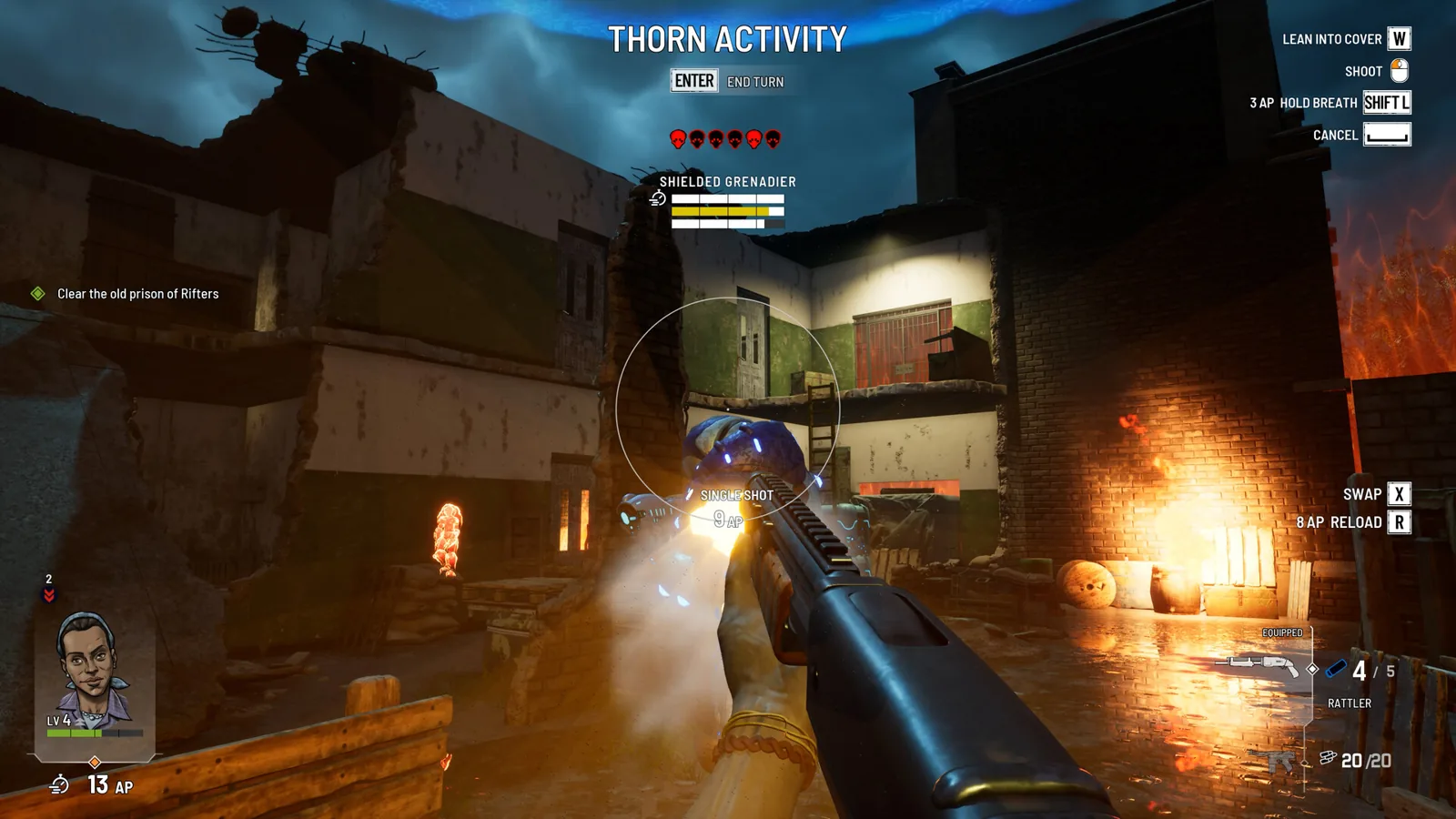
| Armor | Boomer shells and grenades to blow off armor chunks, then fire at the exposed section. The targeting display shows whether you are hitting armor or health. |
| Health | Roaster for direct health damage once defences are down. |
| Melee units | Strikers ignore shields and armor, and your own melee punches ignore them too — useful when a target is still plated. |
Two practical notes from his play: enemies with reactions will often scamper away from a grenade, so get them to move first and throw after; and using overwatch costs you your reactions for that turn.
Next steps
- If you are deciding what to bolt onto a gun you already like, the weapon attachments page breaks down the part categories and what each slot tends to change.
FAQ
What weapons are in Every Day We Fight?
The Steam page describes 12 unique guns with over 100 attachments and parts. The 1.0 notes name five additions — Boomer, Shredder, Roaster, Stumper and Riptide — and a 1.0 playthrough also showed the Long Haul and Deadbolt sniper rifles, the Rattler, Mangler and Razorbolt rifter weapons, and the base shotgun.
Which gun is best against shields?
In the 1.0 stream the Shredder, shotgun and Riptide were the reliable shield-strippers, with the Roaster also effective; the Boomer was noticeably weak against them. Treat that as one player's experience rather than a fixed rule.
Do weapon drops carry between runs?
Found items can be added to your loot table the first time you pick them up, which makes them available in later randomised drops. In Forever War your levels and gear carry forward unless you choose the reset that leaves you with a dart gun and teleporter.
How do I get more weapon parts?
Finish encounters and open the rift chest, spend objective keys on rifter stash chests, and craft at the workbench with scrap. Raising scrap through the custom difficulty modifiers speeds up the crafting side considerably.
Related guides for this game
Weapons Guides Index
Every Day We Fight Weapon Attachments: Gun Parts
Gun parts in Every Day We Fight drop as gun-specific loot, fit on the weapons screen, or get crafted with scrap at a workbench. What they change.
Combat Guides Index
Every Day We Fight Heat Meter: Risk, Loot and Control
Heat is Every Day We Fight's risk-reward dial: higher heat means harder fights and better drops, and Sabotage and Ambush missions let you raise or lower it.
Every Day We Fight Action Points: How the Turn Pool Works
Action Points pay for moving, shooting, reloading and Overwatch in Every Day We Fight, and leftovers can roll into the next turn.
Every Day We Fight how to break armor plates
Armor in Every Day We Fight comes off plate by plate: aim at the head, chest, arms or legs, and read the damage preview to see armor versus HP.
Every Day We Fight Overwatch: Manual Reaction Shots
Overwatch in Every Day We Fight is a hands-on first-person shot you aim yourself. It costs action points and your Reflex, and locks you in place.
Guide Guides Index
Every Day We Fight Walkthrough: Opening and Combat
A practical Every Day We Fight walkthrough: the opening fights, aiming, cover, Overwatch, and what actually carries over between time loops.