
Every Day We Fight Reflexes: How Reactions Work
Reflex actions in Every Day We Fight explained: scrambling out of gunfire, Kill Assist, Covering Fire, Dylan's punch, and the Overwatch trade-off.
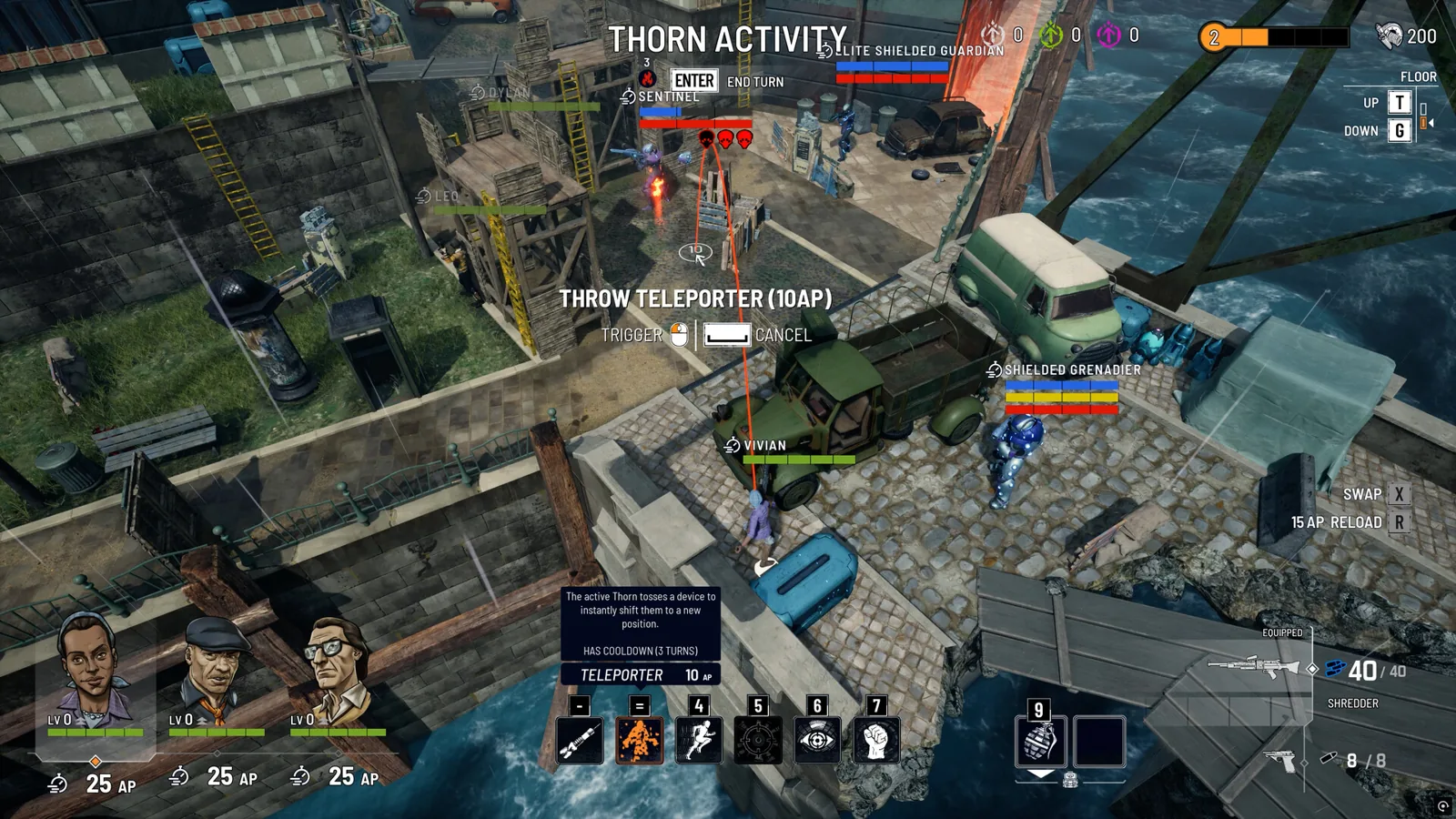
Table of Contents
Reflexes are the game's reaction system: a small allowance of off-turn movement or fire that both your Thorns and the Rifters can spend when something happens on the battlefield. The official Steam page frames them as per-character reactions that can "intercept enemy movement and assist allied kills, or to scramble away from enemy fire" — and asks whether you save them for defense or spend them to keep pressure on. In practice, players describe one reflex action per unit per round, and the use they mention most often is diving out of the way of a shot.
What a reflex action actually does
The Epic Games Store guide to surviving the Rifters describes Reflexes as a system where you and the enemy "briefly and quickly react to attacks," letting a Thorn run to nearby cover and get clear of incoming shots. It is explicitly not a free dodge: the guide notes you can only move a small amount, enemy gunfire follows you in slow motion while you move, and Reflexes are not a reliable way to avoid damage, though they can help.
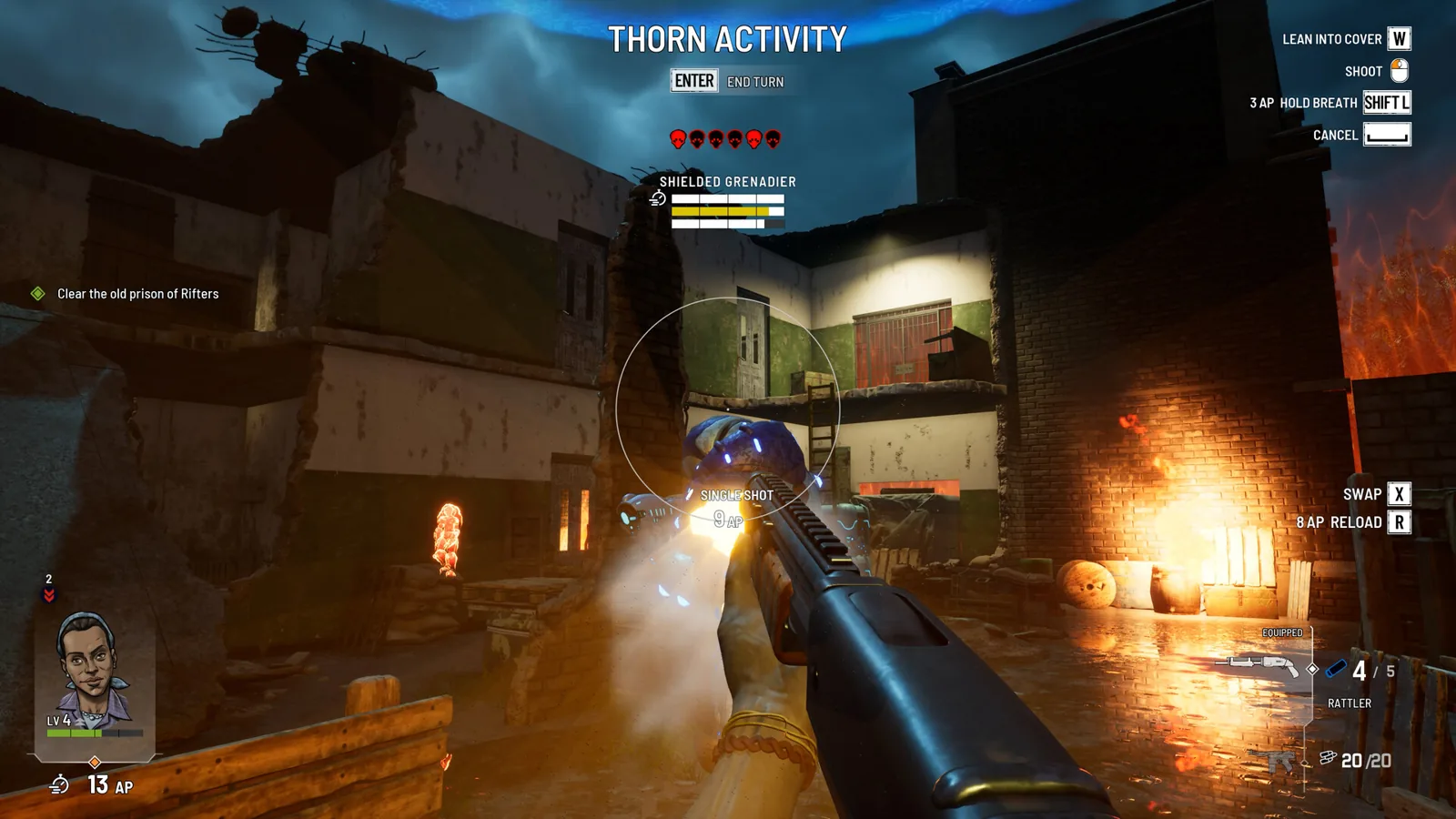
That slow-motion detail matters, because the reaction happens inside the shooting. A 1.0 gameplay video explains that when you shoot at a Rifter, time slows while it tries to move out of the way, and you — still in first person — have to track the moving target. Your own scramble works the same way in reverse: when an alien lines up a shot or lobs a grenade at one of your Thorns, you get a prompt and can dive a short distance to somewhere safer. The same player notes that you only get to use it once per round, so a reflex spent early is gone for that turn.
The character-specific reflexes
Beyond the generic scramble, each Thorn has their own reaction, and these are what make the system feel like part of the squad rather than a universal dodge. The same gameplay account describes the three:
- Vivian — Kill Assist. She finishes off enemies a teammate has just about taken down.
- Leo — Covering Fire. He fires back when a teammate comes under fire.
- Dylan — Proximity Punch. He punches anything that wanders too close, and the punch ignores shields. Enemies standing near him on their own turn can trigger the reaction again, which is why players like parking him in a crowd; the same player reports unlocking a second reflex punch per turn as they progressed.
The 1.0 notes mention tuning on these prompts — "Increased sensitivity of Kill Assist and Covering Fire" — and that both now let you switch weapons and fire modes while reacting. So if a Kill Assist prompt appears and the current gun is empty, the reaction itself is a chance to swap to something usable.
The Overwatch trade-off
The key constraint is that Overwatch and Reflexes compete for the same resource. The Epic guide is blunt about it: setting up Overwatch locks a character in place and means you "won't be able to use your Reflexes to respond to enemy moves on that turn." A player's early-access session describes the same cost in the tutorial text — placing an Overwatch cone spends action points and the reflex action up front, so the Thorn cannot scramble afterward.
That is the real decision the system creates. A Thorn on Overwatch is a trap for the enemy's turn but a sitting target if the enemy gets the drop on them. A Thorn holding their reflex is harder to kill but contributes nothing while the Rifters move. The 1.0 patch notes also reference an enemy "Revenge" reflex on Enforcers and a fix for Revenge triggering when an Enforcer lacks a reflex token — a sign that the Rifters are playing by comparable rules.
What can stop a reflex from firing
Two limits are worth knowing before you build a plan around reactions. First, the 1.0 notes record a fix so that Reflexes fail to function when a unit has the Blinded status effect, with a note that this does not apply to Overwatch — so blinding effects can shut down a scramble or a Kill Assist while leaving an overwatch cone intact. Second, the notes record a fix for an initial reflex action being ignored after triggering another Thorn's reflex, which is the kind of interaction worth remembering if a chain of reactions seems to stall.
Because the Epic guide was written during Early Access, its description of Reflexes reflects that period; the 1.0 notes show the system was still being tuned afterward, so treat its finer numbers as an early-access account rather than a final specification.
FAQ
What are reflexes in Every Day We Fight?
They are limited off-turn reactions available to both your Thorns and the Rifters. The developer describes them as per-character actions to intercept enemy movement, assist allied kills, or scramble away from enemy fire.
How do you use reflexes to dodge?
When an enemy lines up a shot or throws a grenade at one of your Thorns, a prompt lets you dive a short distance to safer ground while the incoming fire plays out in slow motion. It is not a reliable escape — the Epic guide warns you can only move a small amount and you can still be hit.
Can you use reflexes and Overwatch at the same time?
No. Setting up Overwatch spends the reflex action along with action points, so that Thorn cannot scramble on the enemy's turn. The Epic guide states this directly as the cost of Overwatch.
Do enemies use reflexes too?
Yes. Rifters scramble when you shoot or grenade them, and time slows while they move, so you have to track a moving target in first person. The 1.0 notes also reference Enforcers having a Revenge reflex.
Related guides for this game
Combat Guides Index
Every Day We Fight Action Points: How the Turn Pool Works
Action Points pay for moving, shooting, reloading and Overwatch in Every Day We Fight, and leftovers can roll into the next turn.
Every Day We Fight how to break armor plates
Armor in Every Day We Fight comes off plate by plate: aim at the head, chest, arms or legs, and read the damage preview to see armor versus HP.
Every Day We Fight Heat Meter: Risk, Loot and Control
Heat is Every Day We Fight's risk-reward dial: higher heat means harder fights and better drops, and Sabotage and Ambush missions let you raise or lower it.
Every Day We Fight Overwatch: Manual Reaction Shots
Overwatch in Every Day We Fight is a hands-on first-person shot you aim yourself. It costs action points and your Reflex, and locks you in place.
Modes Guides Index
Every Day We Fight Iron Man Mode: How It Works
What Iron Man mode does in Every Day We Fight, how to start a run, and how it differs from difficulty settings and Forever War mode.
Community Guides Index
Every Day We Fight Review Roundup: What Players Say
Player and press impressions of Every Day We Fight: a Mostly Positive Steam score, praised first-person tactics, and the complaints that keep it mixed.